First Aid for Sudden Heart Attack: A Step-by-Step Guide
A sudden heart attack can be a terrifying experience, especially if you’re alone. Knowing what to do in those crucial minutes can make all the difference. This guide provides a clear and concise summary of the essential first-aid steps to take if you suspect a heart attack.
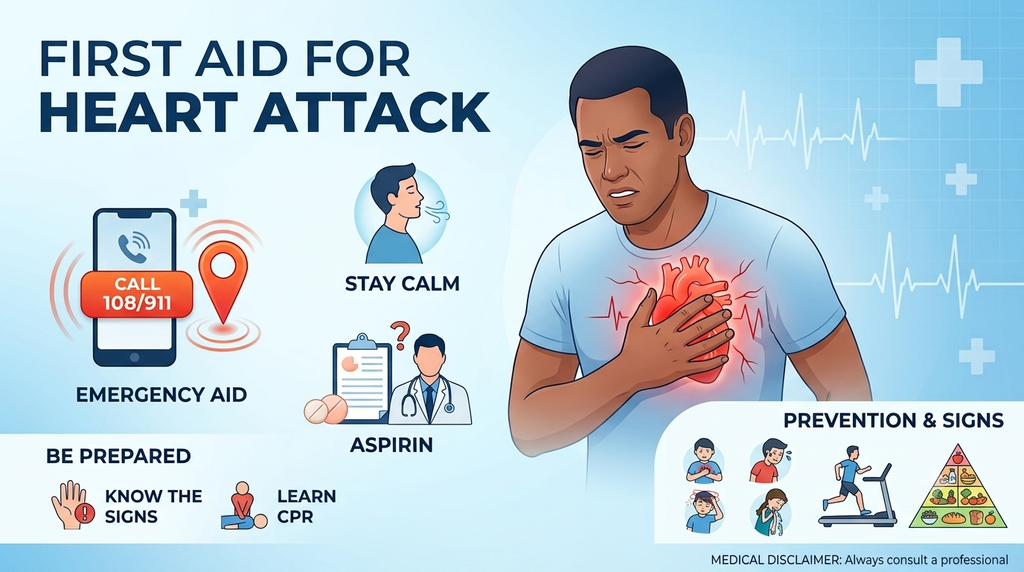
What to Do If You Suspect a Heart Attack:
- Recognize the Warning Signs: The most common symptoms of a heart attack include sudden chest pain, which can feel like pressure, tightness, squeezing, or aching. Other symptoms include sweating, vomiting, and dizziness. Be aware that symptoms can vary, and not everyone experiences all of them.
- Stay Calm and Seek Help Immediately: If you or someone around you is exhibiting these symptoms, do not ignore them. Your priority should be to get medical help as quickly as possible.
- Breathe Deeply: If you’re experiencing a sudden heart attack, try to take deep breaths to reduce panic and anxiety. Remember, this is not a treatment but a way to manage distress while waiting for professional help.
- Call an Ambulance (or 911 in the US): Do not drive yourself to the hospital. Emergency medical technicians can begin life-saving treatment on the way to the hospital, which is not possible if you’re driving.
- Aspirin: While taking aspirin might seem intuitive, it’s crucial to only take it if a doctor or emergency dispatcher advises you to do so, especially if you have an history of bleeding problems.
- Avoid Delaying Treatment: Every minute counts during a heart attack. Do not wait to see if the pain subsides. Immediate treatment significantly improves outcomes and reduces the risk of heart damage.
- Take Your Medications (if prescribed): If you’ve been prescribed medication for a heart condition, take it as directed. If you’re not sure, wait for medical professionals to arrive and advise you.
- Regular Check-ups: Prevention is key. Schedule regular check-ups with your doctor to monitor your heart health, especially if you have a family history of heart disease or other risk factors.
- Heart-Healthy Lifestyle: Maintaining a healthy lifestyle with regular exercise and a balanced diet can go a long way in reducing the risk of heart disease. Avoid smoking and excessive alcohol consumption, and manage stress in healthy ways.
By being informed and knowing the essential first-aid steps, you can be better prepared to handle a heart attack and potentially save a life. Remember to stay calm, act quickly, and prioritize getting professional medical help.